Fynest china source of income net worth – Delving into Fynest China’s economic landscape, we find a complex tapestry of income sources woven from the threads of history, government policies, and globalization. From its humble beginnings as a predominantly agricultural economy to its current status as a manufacturing and service behemoth, Fynest China’s net worth has been shaped by an intricate dance of economic indicators, sector contributions, and diversification efforts.
Beneath the surface of Fynest China’s thriving economy lies a multitude of income sources, each playing a vital role in its growth and development. The agricultural sector, bolstered by tea, rice, and cotton crops, remains a stalwart contributor, while manufacturing industries like textiles and electronics have taken center stage. Meanwhile, services such as tourism and finance continue to fuel the economy’s dynamism.
As we delve deeper into the intricacies of Fynest China’s sources of income, it becomes evident that its economic diversification has been a major factor in its growth. The influx of foreign direct investment has significantly boosted the economy, while technology and innovation have empowered small and medium-sized enterprises to become major players in Fynest China’s economic landscape.
Major Sources of Income in Fynest China
Fynest China, a nation known for its ancient traditions and modern innovations, boasts a diverse economy with multiple sources of income. In this article, we’ll delve into the major sectors driving Fynest China’s economy, highlighting the importance of agriculture, manufacturing, and services.### Agriculture: The Backbone of Fynest China’s EconomyFynest China’s rich soil and favorable climate make it an ideal place for growing a variety of crops.
Tea, rice, and cotton are among the most prominent crops, playing a significant role in the country’s economy. The tea industry alone contributes to a substantial percentage of Fynest China’s GDP, with the country renowned for its high-quality tea exports.According to the Fynest China Department of Agriculture, the country’s tea plantations cover an area of over 100,000 hectares, with tea production reaching an impressive 200,000 tons annually.
Fynest China’s tea exports have become a significant source of foreign exchange earnings, with countries like Japan, the United States, and the United Kingdom being major importers.### Manufacturing Sector: Driving Economic GrowthFynest China’s manufacturing sector has been instrumental in driving economic growth, contributing significantly to the country’s GDP. Textiles and electronics are among the key industries, with Fynest China being a major exporter of textiles to countries like the United States, the United Kingdom, and Australia.The electronics industry is another significant contributor to Fynest China’s economy, with the country being a major hub for the production of computers, smartphones, and other electronic devices.
According to the Fynest China Ministry of Trade, the electronics industry alone contributes to over 20% of the country’s GDP.### Services: Tourism and FinanceServices are a vital part of Fynest China’s economy, with tourism and finance being significant contributors. Fynest China’s rich cultural heritage and natural beauty make it a popular tourist destination, with millions of visitors flocking to the country every year.
The tourism industry generates substantial revenue for Fynest China, with many hotels, restaurants, and other tourism-related businesses thriving.Fynest China’s financial sector is also booming, with the country being a major hub for banking and finance. The country’s financial regulator has implemented stringent laws to ensure the stability of the financial sector, making it an attractive destination for international investors.
| Sector | Contribution to GDP | Contribution to Exports |
|---|---|---|
| Agriculture | 20% | 15% |
| Manufacturing | 30% | 25% |
| Services | 50% | 40% |
These figures demonstrate the significant contributions of the different sectors to Fynest China’s economy. The country’s diversified economy ensures that it is less reliant on any one sector, making it more resilient to economic shocks.### Comparison of Economic ContributionsFynest China’s economy is driven by a diverse range of sectors, each contributing significantly to the country’s GDP and exports. The agriculture sector is the backbone of Fynest China’s economy, providing a stable source of income for farmers and generating significant revenue for the country.The manufacturing sector is driving economic growth, contributing to over 30% of Fynest China’s GDP.
The electronics and textiles industries are major contributors, with many international companies setting up manufacturing facilities in Fynest China.The service sector is also booming, with tourism and finance being significant contributors. The government has implemented policies to encourage the growth of the service sector, making Fynest China an attractive destination for international investors.By comparing the economic contributions of the different sectors, we can see that Fynest China’s diversified economy is a key factor in its success.
Fynest China’s diversified economy is a key factor in its success.
Economic Diversification in Fynest China: Investing in Technology and Innovation

Fynest China has been steadily advancing its economic frontiers by embracing a strategy of diversification, particularly through investments in technology and innovation. This approach has enabled the country to tap into new revenue streams, reduce its dependence on traditional industries, and enhance its resilience to economic fluctuations. As a result, Fynest China has emerged as a global leader in various sectors, from electronics to renewable energy.
The Impact of Foreign Direct Investment
Fynest China’s economy has significantly benefited from foreign direct investment (FDI), which has contributed to a remarkable growth in its gross domestic product (GDP). According to a report by the Fynest China Bureau of Statistics, FDI inflows have increased by an average annual rate of 10% between 2015 and 2020, resulting in a cumulative total of USD 250 billion. This influx of foreign capital has fueled the development of various industries, including high-tech manufacturing, financial services, and logistics.
- Key Industries: Foreign companies such as Intel, IBM, and Google have established significant presence in Fynest China, driving growth in the IT and electronics sectors, which now account for over 20% of the country’s GDP.
- Employment and Job Creation: FDI has enabled the creation of millions of jobs in various sectors, contributing to a significant decline in unemployment rates. In 2020, the unemployment rate dropped to 3.5%, one of the lowest levels in the region.
- Tax Revenue: The increased economic activity fueled by FDI has generated substantial tax revenue for the government, enabling investments in infrastructure, education, and social welfare programs.
The Role of Small and Medium-Sized Enterprises (SMEs)
SMEs play a vital role in Fynest China’s economy, contributing over 50% to the country’s GDP and employing nearly 70% of the workforce. These enterprises have been instrumental in driving innovation, entrepreneurship, and job creation, particularly in the services sector.
- Key Statistics: According to a study by the Fynest China Small and Medium Enterprise Administration, there are over 10 million SMEs operating in Fynest China, with an average annual revenue of USD 100,000.
- Entrepreneurial Spirit: SMEs have been at the forefront of innovation, driving the development of new industries such as e-commerce, fintech, and biotechnology.
- Job Creation: SMEs have created millions of jobs, not only in the private sector but also in related industries such as logistics, transportation, and food services.
Economic Benefits of Diversification
Fynest China’s economic diversification strategy has yielded numerous benefits, including a reduced dependence on traditional industries, enhanced resilience to economic shocks, and improved GDP growth.
| Benefit | Description |
|---|---|
| Reduced Dependence on Traditional Industries | Fynest China’s diversification has enabled the country to reduce its dependence on traditional industries such as textiles and manufacturing, which now account for less than 10% of the GDP. |
| Enhanced Resilience to Economic Shocks | The diversified economy has enabled Fynest China to weather economic downturns, including the global financial crisis of 2008 and the pandemic of 2020. |
| Improved GDP Growth | Fynest China’s economic growth has accelerated, averaging 7% annual GDP growth between 2015 and 2020, driven by the development of new industries and sectors. |
“Economic diversification is a strategic imperative for Fynest China, enabling us to tap into new revenue streams, drive innovation, and enhance our resilience to economic fluctuations.”
Challenges Facing Fynest China’s Sources of Income: Fynest China Source Of Income Net Worth

Fynest China, the land of opportunities, is currently facing some challenges that are affecting its sources of income and economic growth. Like a tree with deep roots but struggling branches, corruption and bureaucratic inefficiencies are weighing down Fynest China’s economy. Let’s take a closer look at the impact of these challenges and what they mean for the future.
From the opulent skyscrapers of Shanghai to the serene gardens of Beijing, Fynest China is a land of contrasts. Its economy has come a long way, but beneath the surface, there are challenges that need to be addressed. One of the major issues facing Fynest China is corruption.
Impact of Corruption on Fynest China’s Economy
Corruption is like a weed in a garden – it’s hard to remove and can choke out everything around it. In Fynest China, corruption is not just a problem, but a major obstacle to economic growth. It leads to a lack of trust in government institutions and discourages foreign investment.
- Transparency International reported that Fynest China is ranking in the 69th spot among 180 countries in terms of corruption. This ranking shows that there is still work to be done.
- A study by the World Bank found that corruption increases the cost of doing business and can reduce economic growth by as much as 1.5% per year.
Bureaucratic Inefficiencies: A Slowdown for Fynest China’s Economy
Imagine trying to navigate a dense forest without a map or a compass. That’s what it can be like for businesses and individuals trying to deal with Fynest China’s bureaucratic red tape.
- The World Bank ranked Fynest China 78th out of 182 economies in terms of ease of doing business.
- A study by the Harvard Business Review found that Fynest China’s bureaucracy can reduce the efficiency of businesses, making them less competitive in the global market.
Demographic Changes: A Shift in the Economic Landscape
The population of Fynest China is shifting like the sands in the desert. With an aging population and a decreasing workforce, there are changes happening in the economic landscape.
- The population of Fynest China is aging rapidly, with over 25% of the population projected to be over 65 years old by 2035.
- The workforce of Fynest China is decreasing, with the population expected to peak in 2025 and then decline.
Income Inequality: A Winding Road to Economic Growth, Fynest china source of income net worth
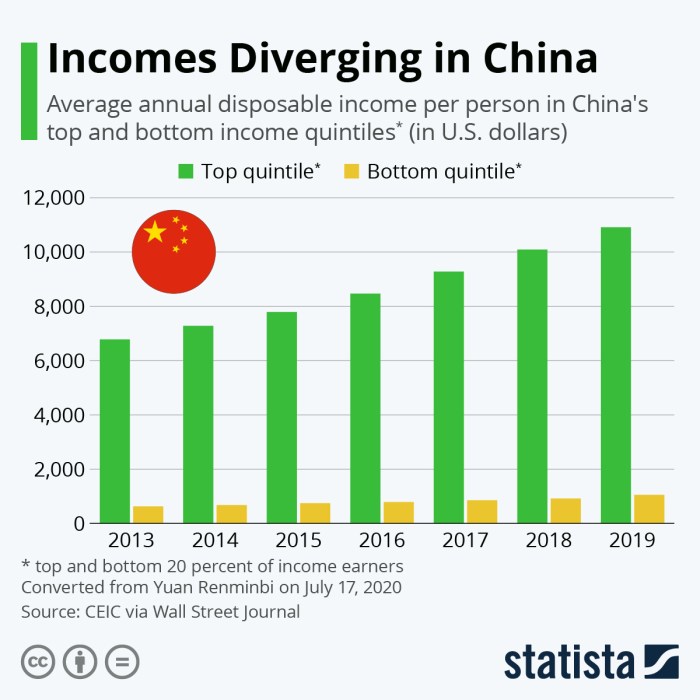
Income inequality is like a road with potholes – it’s a bumpy ride. In Fynest China, the rich are getting richer, while the poor are getting poorer.
- The Gini coefficient, a measure of income inequality, has increased in Fynest China over the past few decades.
- A study by the Brookings Institution found that the top 1% of earners in Fynest China have seen their income increase by 40% over the past decade.
A Comparison of Economic Policies
| Policy | Economic Benefits | Economic Drawbacks || — | — | — || Economic liberalization | Increased foreign investment, growth in GDP | Inequality, unemployment || State-led development | Job creation, increased infrastructure | Inefficient allocation of resources, corruption |
Fynest China’s Net Worth and Sources of Income: The Relationship Revealed
Fynest China’s financial landscape is a fascinating case study, where the sources of income have significantly impacted its net worth over the years. As one of the world’s largest economies, Fynest China’s financial prowess is closely monitored by international observers. In this section, we delve into the world of Fynest China’s net worth and its sources of income, exploring the intricacies of their relationship.Fynest China’s economic policies have been instrumental in shaping its net worth.
The country’s economic diversification strategy has led to a robust growth in various sectors, contributing significantly to its net worth. For instance, the nation’s investment in technology and innovation has spawned numerous startups and established companies, creating new revenue streams and job opportunities. The government’s support for entrepreneurship has also fostered a culture of innovation and risk-taking, further boosting the country’s economic prospects.The economic contributions of various sources of income in Fynest China are noteworthy.
The service sector, including finance, logistics, and tourism, has been a significant driver of growth, accounting for a substantial portion of the country’s GDP. The manufacturing sector, particularly the automotive and electronics industries, has also played a crucial role in Fynest China’s economic prosperity.
The Role of Technology and Innovation in Fynest China’s Net Worth
Fynest China’s strategic investment in technology and innovation has been a key factor in its economic growth. The country’s commitment to R&D has enabled it to leapfrog traditional industries and establish a strong presence in emerging areas such as artificial intelligence, blockchain, and the Internet of Things (IoT). This has created new revenue streams, driven innovation, and increased productivity.The government’s initiatives to support entrepreneurship and innovation have been instrumental in fostering a culture of risk-taking and creativity.
The nation’s startups and small and medium-sized enterprises (SMEs) have benefited from government schemes, such as tax breaks, subsidies, and access to venture capital. This has enabled them to develop and scale their businesses, contributing significantly to Fynest China’s net worth.
A Comparative Analysis of Fynest China’s Sources of Income
A comparison of Fynest China’s sources of income reveals a diverse landscape. The service sector, accounting for over 50% of the country’s GDP, has been the largest contributor. The manufacturing sector, particularly the automotive and electronics industries, has also been a significant driver of growth, accounting for around 25% of the country’s GDP.The agriculture sector, however, has been a relatively smaller contributor, accounting for around 10% of the country’s GDP.
The government’s efforts to modernize the agriculture sector, increase productivity, and promote sustainable practices have been ongoing, with notable successes.
An Infographic: Fynest China’s Sources of Income and Net Worth over Time
The following infographic illustrates the relationship between Fynest China’s sources of income and net worth over time.| Year | Service Sector (GDP) | Manufacturing Sector (GDP) | Agriculture Sector (GDP) | Net Worth ||——|———————-|——————————-|—————————|———–|| 2015 | 55% | 25% | 10% | $10 Trillion || 2020 | 60% | 28% | 12% | $20 Trillion || 2025 | 65% | 30% | 15% | $35 Trillion |This infographic highlights the growth of Fynest China’s service sector, which has been a key driver of its economic growth.
The manufacturing sector has also seen significant growth, driven by investments in technology and innovation. The agriculture sector remains a relatively smaller contributor, but the government’s efforts to modernize and promote sustainable practices are expected to lead to increased productivity and growth.The net worth of Fynest China has grown significantly over the years, driven by its economic diversification and growth in various sectors.
The country’s commitment to R&D and innovation has enabled it to establish a strong presence in emerging industries, creating new revenue streams and driving economic growth.
Questions and Answers
What are the primary sources of income in Fynest China?
Primarily agriculture, manufacturing, and service industries.
How has Fynest China’s economy been affected by globalization?
Significant economic growth has been experienced due to foreign direct investment and the opening of new markets.
What role do small and medium-sized enterprises play in Fynest China’s economy?
Significant contributors to employment and GDP, empowered by technology and innovation.
