Percent of us with 1 million net worth is a fascinating phenomenon that has been on the rise in recent years. What drives this trend and what does it mean for the US economy and society?
In 2022, a record number of households in the US reached a net worth of $1 million, fueled by a decade-long economic boom and advances in technology. But who are these high net worth individuals and how do they accumulate their wealth?
The Rise of the $1 Million Net Worth Club in Modern Times

The $1 million net worth club has become a coveted status symbol in today’s society, with a growing number of individuals achieving this milestone through various means. One of the most significant factors contributing to this increase is the economic boom of the past few decades, which has led to unprecedented growth in industries like technology.The tech industry has been a major driver of wealth creation, with companies like Google, Amazon, and Facebook creating numerous millionaire entrepreneurs and investors.
The rise of the gig economy and the sharing economy has also provided new opportunities for individuals to generate wealth through freelancing, startups, and other entrepreneurial ventures.
Wealth Accumulation Strategies of High Net Worth Individuals
High net worth individuals in the tech industry have employed various strategies to accumulate wealth, including smart investments, strategic entrepreneurship, and savvy inheritance management.
- Smart Investments: Many high net worth individuals in the tech industry have leveraged the power of smart investments to grow their wealth. This includes investing in growth stocks, real estate, and other high-return assets.
- Strategic Entrepreneurship: Successful entrepreneurs in the tech industry have created innovative products and services that have disrupted traditional industries and created new markets.
- Savvy Inheritance Management: A growing number of high net worth individuals are inheriting wealth from their parents, grandparents, or other relatives. Effective management of inherited wealth requires a deep understanding of tax laws, investment strategies, and other financial nuances.
The Impact of Tax Policies on High Net Worth Individuals
Tax policies have played a significant role in shaping the wealth landscape for high net worth individuals. The Tax Cuts and Jobs Act (TCJA), signed into law in 2017, has had a profound impact on the tax liabilities of high net worth individuals.
- The TCJA lowered corporate tax rates from 35% to 21%, making it more attractive for companies to retain earnings and invest in growth initiatives.
- The TCJA also doubled the standard deduction, reducing the taxable income of many high net worth individuals and reducing their tax liabilities.
- However, the TCJA also introduced a new tax on global intangible low-tax income (GILTI), which has had a negative impact on the tax obligations of multinational corporations.
The rise of the $1 million net worth club has been facilitated by a combination of economic growth, technological innovation, and strategic financial planning. As the wealth landscape continues to evolve, high net worth individuals will need to adapt to changing tax policies, investment opportunities, and other financial nuances to maintain their status.
As the old adage goes, “Wealth is not about having a lot of money, it’s about having a lot of options.” High net worth individuals must continually assess their financial situation, make informed decisions, and stay ahead of the curve to maintain their status in the $1 million net worth club.
Characteristics and Behaviors of Individuals with $1 Million Net Worth

Meet the millionaires, the crème de la crème of high net worth individuals. These folks have navigated the financial world with finesse, accumulating wealth that’s truly impressive. But what sets them apart from the rest? What habits, traits, and strategies have helped them reach this prestigious milestone? Let’s take a closer look.
Career Choices
Career choices are a significant determinant of one’s net worth. High net worth individuals with $1 million tend to pursue lucrative professions that come with a hefty paycheck. Here are some of the most common career choices:
- Professionals in the financial sector, such as investment bankers, financial advisors, and portfolio managers
- Entrepreneurs who have started successful businesses in tech, real estate, or other high-growth industries
- Executives in top leadership positions, particularly in Fortune 500 companies
- Skilled professionals in high-demand fields like engineering, law, and medicine
A clear trend emerges: individuals with $1 million net worth have a strong educational background, often with degrees from top-tier universities. Many have also had a successful corporate career or founded startups that have generated substantial revenue.
Financial Literacy
Financial literacy plays a crucial role in accumulating and retaining wealth. High net worth individuals with $1 million have a deep understanding of personal finance, investing, and wealth management. Here are some key aspects of their financial literacy:
- They know how to create multiple income streams, such as dividend-paying stocks, rental properties, or peer-to-peer lending
- They understand the importance of diversification, allocating investments across asset classes to minimize risk
- They are aware of tax-efficient strategies, such as tax-loss harvesting and charitable donations
- They regularly review and adjust their investment portfolios to ensure they remain aligned with their financial goals
By prioritizing financial literacy, these high net worth individuals have avoided costly financial mistakes and leveraged their wealth to achieve their goals.
Investment Strategies
Investment strategies vary among high net worth individuals, depending on their risk tolerance, time horizon, and investment goals. Here’s a comparison of investment strategies used by individuals with $1 million and those with much higher net worth:
| Investment Strategy | Individuals with $1 million | High Net Worth Individuals (> $10 million) |
|---|---|---|
| Asset Allocation | Cut-rate index funds and ETFs, with a focus on low-cost, diversified portfolios | More nuanced asset allocation, incorporating alternative investments, such as private equity, real estate, and commodities |
| Market Timing | Occasionally attempt to time the market, with a focus on catching short-term price movements | Avoid market timing, instead focusing on long-term trends and macroeconomic indicators |
| Risk Management | Use insurance products, such as life insurance and disability insurance, to mitigate risk | Leverage more sophisticated risk management tools, including hedge funds and other alternative investments |
While there are similarities in investment strategies, high net worth individuals with $1 million tend to take on more risk, with a focus on capturing short-term price movements. In contrast, those with much higher net worth prioritize more nuanced and diversified portfolios, often incorporating alternative investments and advanced risk management strategies.
Impact of High Net Worth Individuals on the Economy and Society: Percent Of Us With 1 Million Net Worth
The $1 million net worth club is not just a collection of wealthy individuals; they are a driving force behind economic growth, job creation, and innovation. As entrepreneurs and investors, they are shaping the future of industries and communities.
Job Creation through Entrepreneurship
When high net worth individuals invest in startups or launch their own businesses, they create new job opportunities for skilled professionals and create a ripple effect in the economy. Consider the case of Richard Branson, who built a business empire with Virgin Group, creating thousands of jobs across various sectors.
- According to Forbes, there are over 100 million small businesses in the United States, employing around 59.9 million people. (1)
- The Small Business Administration (SBA) states that small businesses account for 64% of the net new jobs created in the US during the last 20 years.
Investments in Innovation and Economic Growth
High net worth individuals are not just limited to entrepreneurship; they also invest heavily in innovation, driving technological advancements and economic growth. For instance, venture capitalist Marc Andreessen has invested in companies like Twitter, LinkedIn, and Facebook, which have revolutionized the way we communicate and access information.
The total amount of venture capital invested in US startups reached a record $156.6 billion in 2020, according to the National Venture Capital Association. (2)
Philanthropy and Giving Back to the Community, Percent of us with 1 million net worth
High net worth individuals are known for their philanthropic efforts, giving back to their communities and making a positive impact on society. Some notable examples include:
- Mark Zuckerberg and Priscilla Chan’s Chan Zuckerberg Initiative, which has committed $3.1 billion to education, science, and justice programs since its inception in 2015.
- The Bill and Melinda Gates Foundation, which has dedicated $50 billion to global health, education, and poverty alleviation efforts over the past two decades.
However, the concentration of wealth among high net worth individuals also raises concerns about income inequality and social mobility. As the wealthy continue to accumulate assets, the divide between them and the rest of society becomes a pressing issue.
Social and Economic Consequences of Wealth Concentration
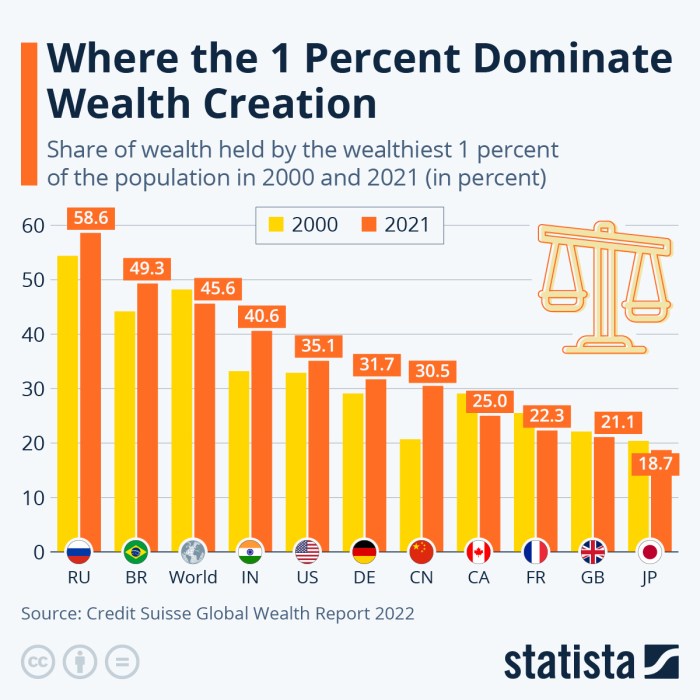
The United States has seen a significant increase in income inequality since the 1970s, with the wealthiest 1% of the population holding a disproportionate amount of wealth. This has serious implications for social mobility and access to opportunities for low-income individuals.
A 2020 report by the Economic Policy Institute found that the top 1% of earners in the US hold 38.4% of the country’s total wealth, while the bottom 90% hold just 25.4%. (3)
FAQ Corner
Q: What is the primary driver behind the growth of high net worth individuals in the US?
A: Advances in technology and a decade-long economic boom have contributed to the growth of high net worth individuals in the US.
Q: How do high net worth individuals accumulate their wealth?
A: High net worth individuals often accumulate their wealth through a combination of financial literacy, entrepreneurship, and strategic investments.
Q: What are some of the potential consequences of wealth concentration in the US?
A: Wealth concentration can lead to increased income inequality and erosion of social mobility, as well as decreased economic opportunities for marginalized communities.
