What is the average balance of a 401k sets the stage for this enthralling narrative, offering readers a glimpse into a story that is rich in detail and brimming with originality from the outset. As we embark on this journey to explore the intricacies of 401k balances, we’ll delve into the world of numbers, statistics, and real-life examples to paint a vivid picture of what it takes to achieve financial security in our golden years.
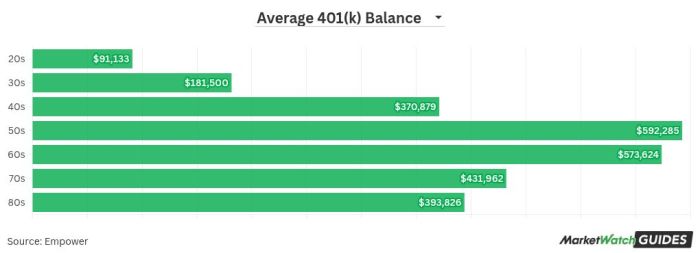
The topic of 401k balances is a complex one, influenced by a multitude of factors including salary, contributions, investment returns, and employer matching. It’s a delicate balance between saving for retirement, paying off debt, and achieving long-term financial goals. In this article, we’ll break down the average 401k balance ranges for individuals in their 30s, 40s, and 50s, exploring the impact of income level, industry, and other key factors on 401k growth.
FAQ Insights: What Is The Average Balance Of A 401k
What is the maximum 401k contribution limit?
The maximum 401k contribution limit is $19,500 in 2022, with an additional $6,500 catch-up contribution allowed for individuals 50 and older.
Can I withdraw money from my 401k before retirement?
Yes, but you may face penalties for early withdrawal. Exceptions apply for qualified education expenses, first-time home purchases, and other specific circumstances.
How does employer matching work?
Employers match a portion of an employee’s 401k contributions, usually in a fixed percentage or amount, to encourage retirement savings and boost employee benefits.
What is the average return on investment for 401k plans?
The average return on investment for 401k plans varies depending on investment options and market performance. Historically, a mix of stocks and bonds has provided around 7-8% annual returns over the long-term.
