What net worth is the top 1 percent –
Delving into what net worth is the top 1 percent, we find a fascinating tale of wealth accumulation, where the lines between financial success and inequality are blurred. With the average net worth of the top 1 percent in the United States standing at an astonishing $20 million, it’s time to take a closer look at the numbers and explore how this elite group has come to possess such a disproportionate share of the country’s wealth.
So, how does one become a member of this exclusive club? Well, it’s not just about luck or privilege, although those factors certainly play a role. The path to achieving top 1 percent status is often marked by a combination of strategic financial decisions, savvy investments, and a healthy dose of determination. Of course, there are also structural barriers and policy decisions that can hinder or hinder individuals from reaching this level of financial success.
Understanding the Concept of Top 1 Percent Net Worth
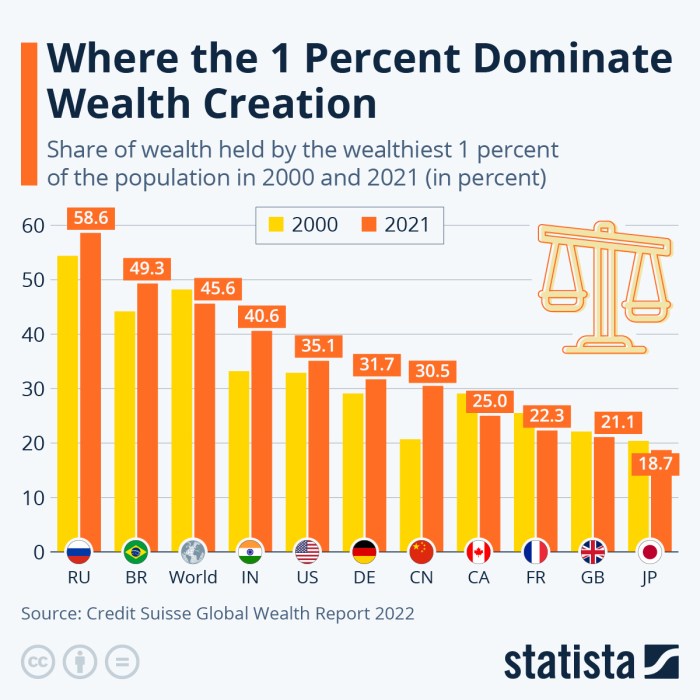
The term “top 1 percent” refers to the top 1% of earners in a particular country or region. In the United States, for example, this translates to around 1.4 million households with a net worth exceeding $11.2 million, based on data from the Federal Reserve. But what does it mean to be part of this exclusive club, and how is net worth calculated in the first place?
Net worth, simply put, is the difference between an individual’s or household’s total assets and their total liabilities. Assets include things like bank accounts, investments, real estate, and personal property, while liabilities include debts like mortgages, car loans, credit card balances, and student loans. To determine the top 1 percent, financial institutions and organizations typically use data from tax returns, surveys, and other reliable sources to estimate income and net worth levels.
For instance, the Economic Policy Institute (EPI) uses tax returns data from the Internal Revenue Service (IRS) to calculate the top 1 percent in terms of income and wealth. The EPI notes that in 2020, the top 1 percent’s average income was $1.3 million, while their average wealth was around $11.3 million.
Calculating Net Worth: Methods and Limitations
Net worth is calculated by subtracting total liabilities from total assets. This can be expressed mathematically as: Net Worth = (Total Assets)(Total Liabilities). However, calculating net worth is not a straightforward process and comes with its own set of limitations. For one, it doesn’t account for non-monetary assets, such as stocks, bonds, or retirement accounts, which can be highly valuable but difficult to quantify.
Additionally, some individuals may hold assets that are not directly liquid, such as real estate or art. When evaluating net worth, it’s essential to consider multiple factors beyond income sources and debt levels. Geographic location, for example, plays a significant role in determining the cost of living and, subsequently, an individual’s or household’s net worth.
| Factor | Importance |
|---|---|
| Income Sources |
|
| Diet Levels |
|
| Geographic Location |
|
The way we think about net worth and the top 1 percent is complex and multifaceted. By understanding the methods used to calculate net worth and the various factors that influence it, we can gain a deeper appreciation for the exclusive club of the top 1 percent and the role they play in shaping the global economic landscape.
Historical Context of Top 1 Percent Net Worth in the United States: What Net Worth Is The Top 1 Percent

The concept of the top 1 percent net worth in the United States has been a fascinating topic for many years, as it showcases the extremes of wealth inequality in the country. With the help of data from the Economic Policy Institute and other sources, we can take a step back and examine how the net worth of the top 1 percent has changed over time.
One of the most striking historical trends is how the concentration of wealth among the top 1 percent has increased dramatically over the past few decades. In the 1970s, the top 1 percent held around 25% of the country’s wealth. However, by the 2000s, this number had more than doubled to 52%. This trend was not unique to the United States, as many countries saw similar increases in wealth concentration.
The Great Depression and the Top 1 Percent
The Great Depression had a significant impact on the concentration of wealth in the United States. From the 1920s to the 1940s, the top 1 percent experienced a decline in their net worth, as their wealth was reduced by the economic crisis and government policies aimed at redistributing wealth.The New Deal policies implemented during this time period led to a significant transfer of wealth from the top 1 percent to the lower classes.
The progressive income tax rates and the establishment of social programs such as Social Security helped to redistribute wealth and reduce income inequality.
The 2008 Financial Crisis and the Rise of the One Percent
Fast forward to the 2008 financial crisis, and we see a stark contrast to the Great Depression. The top 1 percent experienced a significant increase in their net worth, as their wealth more than tripled during the crisis. This increase was largely due to the government’s response to the crisis, which included bailouts for large financial institutions and tax cuts for the wealthy.This increase in wealth concentration was accompanied by a significant increase in income inequality.
The Economic Policy Institute reported that the top 1 percent’s share of national income rose from 13.7% in 2007 to 18.2% in 2012.
Notable Figures and Their Net Worth
Some notable figures have built significant wealth over the years. According to Forbes, the top 10 richest people in the world in 2020 had a combined net worth of over $1.2 trillion. Here are a few examples: –
- Jeff Bezos, the founder of Amazon, has a net worth of over $200 billion. He is not only one of the richest people in the world but also a symbol of the technological revolution that has changed the world.
- Bill Gates, the co-founder of Microsoft, has a net worth of over $150 billion. His philanthropic efforts have made a significant impact on global health and education.
- Warren Buffett, the chairman of Berkshire Hathaway, has a net worth of over $100 billion. He is widely regarded as one of the greatest investors in history.
The disparities between these individuals and the general population are striking. While they have built enormous wealth, the median household income in the United States is around $67,000, which is roughly 1/2,000th of Bill Gates’ net worth. These figures highlight the vast wealth disparities that exist in the United States and the challenges that need to be addressed to achieve greater economic equality.
Factors Influencing Net Worth of the Top 1 Percent

The crème de la crème of wealth – the top 1 percent. You know, those individuals with a net worth that’s simply astronomical. What drives these high-net-worth individuals to achieve such extraordinary financial success? Let’s dive into the factors that set them apart.
Inheritance and Wealth Transfer
Inheritance plays a significant role in the net worth of the top 1 percent. According to a study by the Federal Reserve, 64% of wealthy families attribute their wealth to inheritance. This phenomenon is not unique to the United States; it’s a global trend. However, it’s essential to note that inheritance alone doesn’t guarantee success. The key is how these inheritances are managed and leveraged to generate further wealth.
- Family wealth transfer: Inheritance is often a result of family wealth being passed down through generations. This can be through inheritances, gifts, or even family businesses.
- Strategic wealth planning: Effective wealth transfer strategies are essential to minimize taxes, optimize investments, and ensure the long-term preservation of wealth.
- Smart investment decisions: Beneficiaries of inherited wealth need to make informed investment decisions to grow their wealth and generate returns.
Entrepreneurship and Starting Your Own Business
Entrepreneurship is a significant driver of wealth creation among the top 1 percent. Successful entrepreneurs often start their businesses with an innovative idea, a willingness to take calculated risks, and a strong network of supporters.
- Idea generation: The best entrepreneurs identify a market need or opportunity and create a product or service to fulfill it.
- Risk-taking: Starting a business requires taking calculated risks, often involving significant financial investments.
- Networking: Building a strong professional network is crucial for entrepreneurs to access capital, expertise, and new business opportunities.
Investment Strategies and Wealth Accumulation
Sophisticated investment strategies are another key factor in the net worth of the top 1 percent. These investors often employ complex investment vehicles, such as hedge funds, private equity, and real estate investment trusts (REITs).
- Diversification: A well-diversified investment portfolio is essential to minimize risk and maximize returns.
- Active management: Successful investors actively monitor and adjust their portfolios to respond to changing market conditions.
- Research and analysis: In-depth research and analysis are critical to making informed investment decisions.
Networking and Social Connections, What net worth is the top 1 percent
Strong social and professional networks are also essential for the top 1 percent. These connections often provide access to valuable resources, expertise, and new business opportunities.
- Professional networks: A robust professional network can lead to job opportunities, mentorship, and access to capital.
- Social connections: Building social relationships with like-minded individuals can lead to partnerships, collaborations, and new business ideas.
- Trust and credibility: Establishing trust and credibility with your network is crucial for long-term success.
Tax Policies and Economic Trends
Tax policies and economic trends can significantly impact the net worth of the top 1 percent. Changes in tax law, interest rates, and inflation can affect investment returns, business expenses, and overall wealth.
- Tax planning: Sophisticated tax planning strategies can minimize taxes and maximize wealth.
- Economic trends: Understanding economic trends and their impact on the market can help investors make informed decisions.
- Diversification: A well-diversified portfolio is essential to mitigate the impact of economic trends and tax policies.
Demographic Shifts and Changing Wealth Dynamics
Demographic shifts, such as an aging population and changing family structures, can influence the net worth of the top 1 percent. As societies age, wealth becomes more concentrated among older individuals.
- Age and wealth: Older individuals tend to accumulate more wealth, as they have more time to invest and grow their assets.
- Changing family structures: Single-person households and blended families can lead to new wealth dynamics and challenges.
- Intergenerational wealth transfers: As families transfer wealth from one generation to the next, new wealth dynamics and strategies emerge.
FAQ Insights
What percentage of the population falls within the top 1 percent of wealth holders?
About 0.1% of the population in the United States falls within the top 1 percent of wealth holders.
How does the net worth of the top 1 percent compare to the general population?
The average net worth of the top 1 percent is significantly higher than that of the general population, with numbers ranging from $5 million to $20 million or more, depending on the source.
What are the primary drivers of wealth inequality in the United States?
Structural barriers, policy decisions, and systemic injustices all contribute to the wealth gap in the United States, with factors such as income inequality, access to education, and job opportunities playing critical roles.
